

What changed since July
Six developments from July to September 2026
These are the changes from July to September 2026 that matter most if you sell technology or consulting services in Japan, or hire the people who do.
July 2026
Generative AI use more than doubled in a year
The government’s 情報通信白書 (Jōhō Tsūshin Hakusho, White Paper on Information and Communications) found 58.8% of people in Japan had used generative AI, up from 26.7% in the previous edition. 86.4% of companies now use it in at least one business process.
Source: 総務省 令和8年版 情報通信白書, overview (Japanese)16 July 2026
A national AI computing base with 27,500 GPUs
NVIDIA, the Japanese government and industry started a national AI infrastructure project. Noetra, a company whose 44 investors include SoftBank, Sony, NEC and Honda, will run an AI factory with more than 27,500 NVIDIA Rubin GPUs.
Source: NVIDIA release on PR TIMES; IT Leaders (Japanese)6 August 2026
More than 90% of financial institutions use generative AI
A Bank of Japan survey of 150 banks and other financial institutions found more than nine in ten using or trialling generative AI. The increase over the year was most noticeable at second-tier regional banks.
Source: 日本銀行 金融システムレポート別冊 (Japanese)August 2026
AI budget requests rise almost sixfold
Ministries asked for ¥2.94 trillion for AI-related spending in FY2027, against ¥502.7 billion in the FY2026 budget. The requests follow the second 人工知能基本計画 (Jinkō Chinō Kihon Keikaku, AI Basic Plan), approved by the Cabinet on 14 July. Requests are usually trimmed before the budget is set in December.
Sources: 内閣府 令和9年度AI関連予算要求; 人工知能基本計画 (Japanese)10 September 2026
Ransomware reports reach a half-year record
Police received 123 ransomware reports in the first half of 2026, the most for any half-year since the series began in 2020. 79 came from small and mid-sized companies. The main obligations of Japan’s new active cyber defence law started on 1 October.
Source: 警察庁 figures reported by @IT; Trend Micro on the law (Japanese)14 September 2026
Generative AI reaches core banking
Sony Bank and Fujitsu are using generative AI to build Sony Bank’s core banking system. They report 40% less development work and a development period 30% shorter.
Source: EnterpriseZine (Japanese)Companies using generative AI in at least one business process
Japan against the US, Germany and China. 情報通信白書 (Jōhō Tsūshin Hakusho) 2026, survey January to February 2026

Source: 総務省 令和8年版 情報通信白書, overview. Japan’s 2025 figure is from the 令和7年版 white paper.
Show the figures as a table
| Country | Share of companies |
|---|---|
| Japan, 2026 edition | 86.4% |
| Japan, 2025 edition | 55.2% |
| United States | 90.9% |
| Germany | 91.6% |
| China | 98.1% |
Market briefs
Japan market briefs by segment
Each brief covers one segment in more depth: demand in Japan, who sells there now, companies preparing to enter and what it means for your first Japan hire.
We publish this research for companies planning to launch or grow in Japan. It is the groundwork we do before every Country Manager search, and every figure links to its source, most of them published only in Japanese.
Ransomware: Japan's #1 organisational threat. IPA's 2026 ranking puts damage from ransomware attacks first, ahead of supply chain attacks in second place and AI-related cyber risk in third. We placed the Japan Country Manager for a data protection vendor whose backup, immutable storage and recovery solutions help organisations protect their data against ransomware and recover after an attack. IPA, 29 January 2026.
Cybersecurity vendors in Japan
11812 categories: 105 with documented Japan-facing activity; 13 with Japan activity not yet verifiedExplore the register →Market briefAI security in Japan
3rdRank of AI-related cyber risk in IPA's 2026 list of threats to organisationsRead the brief →Market briefSoftware supply chain security in Japan
2ndRank of supply chain attacks in IPA's 2026 list of threats to organisationsRead the brief →Market briefData and AI infrastructure in Japan
¥14.5BJapan ETL and data preparation market in FY2024, up 11.5% (ITR)Read the brief →Market briefDocument AI in Japan
¥63.6BJapan OCR solutions market, FY2025 estimate, up 7.0% (Deloitte Tohmatsu MIC)Read the brief →Market briefAI coding and developer tools in Japan
49%Share of 400 developers in Japan using AI for code generation or completion (Gartner Japan, 2025)Read the brief →Market briefCustomer service and voice AI in Japan
¥31.3BYano forecast for AI services sold by call centre providers in FY2029Read the brief →Investors behind companies we have worked with
Under each firm is the client it backs. These firms are not our clients and have not endorsed us.


Executive search in Japan
How we run a Japan leadership search
We map the whole market before we approach anyone, so you choose from everyone suitable and not only the people who happen to be looking. It improves the odds that you hire the best person available, and it makes each later decision more accurate.
01 · Map
The whole market, in Japanese and English
We identify every credible candidate for the role, including people who aren’t on LinkedIn, and show you the map before any approach.
02 · Assess
Evidence before you meet anyone
You get a ranked shortlist backed by references and discreet back-channel checks, so interviews start from facts.
03 · Close
One partner from start to finish
The partner you meet runs the search and the close. We work alongside your regional talent team, who keep full visibility of the process.
Our track record
See the full track recordCountry Manager placements
Recorded Future, Fastly, Chainalysis, Zenity
Cybersecurity
Glean
AI
Past placements
SUSE, Celonis, Splunk
Go-to-market hires
Fivetran, Databricks
Searches now closing
As of October 2026. We don’t name clients while a search is running.
- Country Manager, enterprise softwareA transformation leader to take the Japan business to cloud and secure AI.
- Country Manager, data platformThe Japan launch phase, including building the go-to-market team.
- Country Manager, cybersecurityA succession hire to take the Japan business to its next stage of growth.
- Commercial Sales Director and Vice President, AI infrastructureSenior sales leaders to win AI factory and data centre business in Japan.
We’re taking on new searches for the fourth quarter. If you’re planning a Japan leadership hire, book a call.
“I've worked with the team for many years now and they helped me hire the key leader to scale our Japan business, and the one to take us through the merger into Mastercard. Great work.”
“One of the top recruiters VMware has worked with, not only in Japan, but across the whole of Asia Pacific. He is exceptional.”
“If you need someone to assist as you try to enter the Japanese market, don't look any further.”

Murray Clarke
Founding Partner, CEO
Technology and enterprise leadership
- Placing Country Managers and presidents in Japan since 2003
- More than 70 Country Manager appointments
- ManpowerGroup (NYSE: MAN) bought his last search firm and made it Experis Executive
- Studied at the University of Tokyo on a Monbusho scholarship, and works in English and Japanese
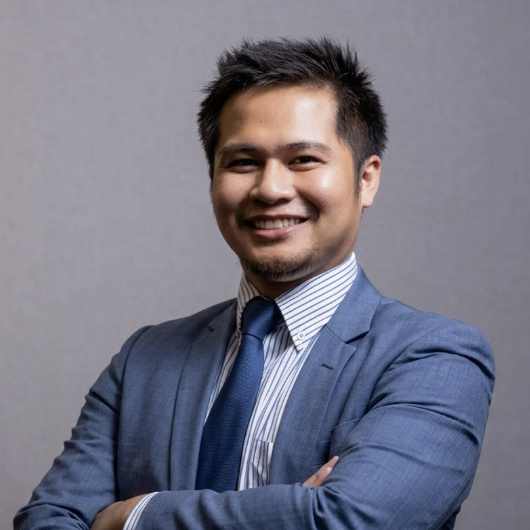
Hiroshi Torobu
Partner
Consulting and professional services
- Eleven years recruiting in Japan, on executive and senior appointments across consulting, technology and manufacturing
- Partner appointments into a Big 4 consulting firm in Japan
- Country Manager appointments for overseas firms setting up in Japan
Partner, Managing Director and Director searches inside consulting firms.
Guides to read alongside this page
Leadership
Japan Country Manager: Builder, Translator or Caretaker?Why the first hire is more than a senior salesperson, and how to choose the right profile for your stage.Read the guide →Cost
The ¥70M Question: what Japan people costs really look likePay, hiring risk and the real cost of building a first Japan team.Read the guide →Entity
EOR vs GK vs KK: what foreign tech companies should knowHow the entity you choose affects hiring, and how the market reads your commitment.Read the guide →Next step
Talk to us about your Japan hire
Thirty minutes on the role, the market for it and what it will take to hire well. You speak with the partner who would run the search, and you leave with our view of that market whether or not it becomes a search.